
There are many ways to apply artificial intelligence in the world of work.
Any sector and field has the potential to increase quality and productivity thanks to AI support. The real challenge lies in its proper use and in clearly defining the boundaries between human and machine. Today's coexistence is essential; therefore, it is important to understand both its benefits and risks.
When we talk about "integration", we refer to building a new work process in which "peripheral" activities - that is, repetitive tasks that consume workers' time - are replaced by automation systems coupled with AI agents that "think" and "act" based on the information we provide. For this reason, it is important to be clear and not rely on the first version, but rather "train" the system until it fully understands our quality standards.
One of the most common risks is viewing an AI agent as a colleague or, worse, as a replacement for an employee.
It is essential to remember that what makes humans unique is their creativity and ingenuity in finding solutions to problems. Artificial intelligence should enhance human work, not replace it. By "enhance", we mean supporting people in managing numerical calculations, interpretations, brainstorming, and many other peripheral activities that are essential for completing primary tasks.
Based on these considerations, we can understand how much this historical period is evolving and how difficult it is to rely on solid foundations, since AI agents represent only the beginning of a long innovation process.
The best approach currently is to continue updating ourselves both theoretically - through specialised publications and communities - and in practice, by defining how a tool or software can be useful to our internal production system or improve communication with our clients. When we understand what is relevant for our company and what is not, we have achieved our goal, since the desired outcome is not to overturn the system that has worked so far, but simply to update it.
Here lies the true problem that is often made: the integration of AI agents does not "change" the way we see and perform our activities, but rather amplifies them, allowing us to reach more users and reduce costs.
Along with constant updating, internal communication and staff development are also of paramount importance. These must proceed in parallel with those of company managers and owners. This means that to fully harness the potential of AI, we must always think as a unified team and not move at different speeds based on varying needs. Everyone can and should try using an artificial system to better understand its use and the limitations it entails.
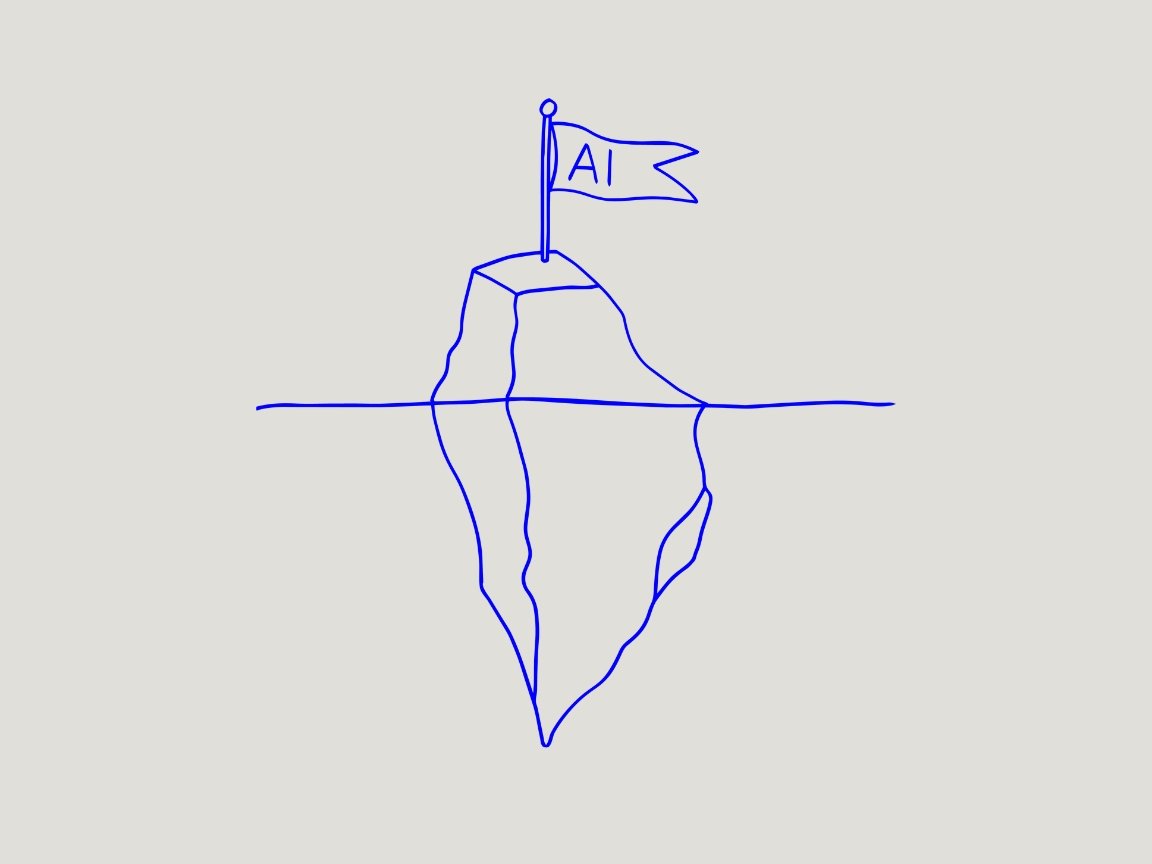
In conclusion, the transformation we are experiencing is just the tip of the iceberg. In the short and long term, we face significant behavioural and workplace changes, with artificial intelligence entering even the most difficult-to-modify environments.
The "fluidity" with which information is communicated and shared between parties through the active use of AI tools will be the true force that will determine the new way of working and collaborating.