
Meta Business Suite in 2026: One Dashboard, Two Platforms.

Meta Business Suite in 2026: one dashboard, two platforms.
For brands operating on Facebook and Instagram, Meta Business Suite is the single point of control. It is the free dashboard, provided by Meta itself, that consolidates everything a company does across its two main platforms - Facebook Pages, Instagram Accounts, organic posts, Stories, Reels, and paid advertising - into one unified interface. From this single environment, businesses can publish content, schedule posts, manage messages, monitor performance, and run ad campaigns. For most small and medium businesses, it is the operational backbone of their social presence.
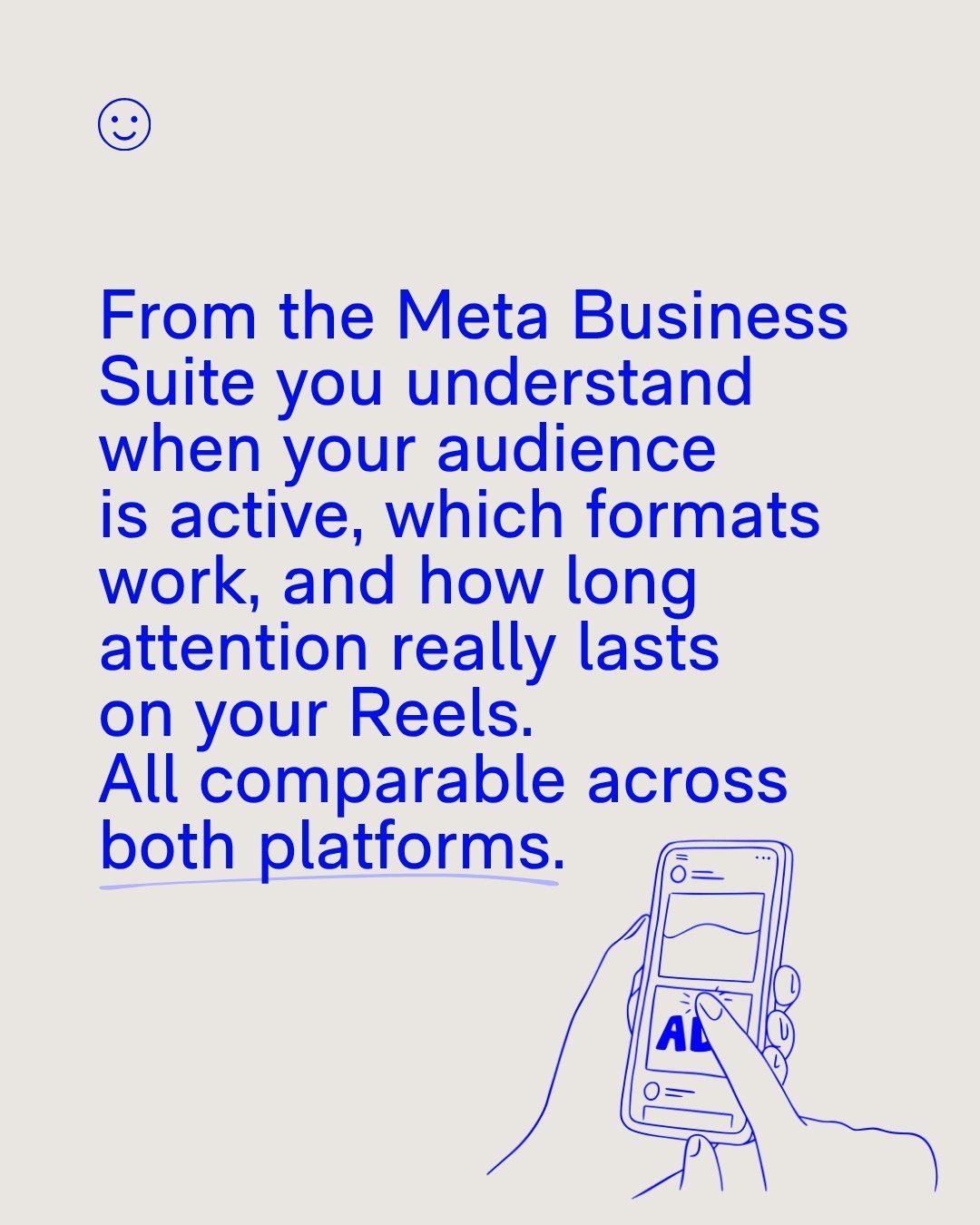
What makes the Suite valuable in 2026 is the cross-property visibility. Organic and paid performance sit side by side, and an integrated inbox pulls messages from Facebook, Instagram and WhatsApp into one stream. The limits are equally clear: scheduling is basic, analytics lack depth, and collaboration is restricted. Most agency-grade setups layer tools like Metricool or Sprinklr on top, using the Suite for execution and a third-party platform for planning and reporting.


The current situation in Europe
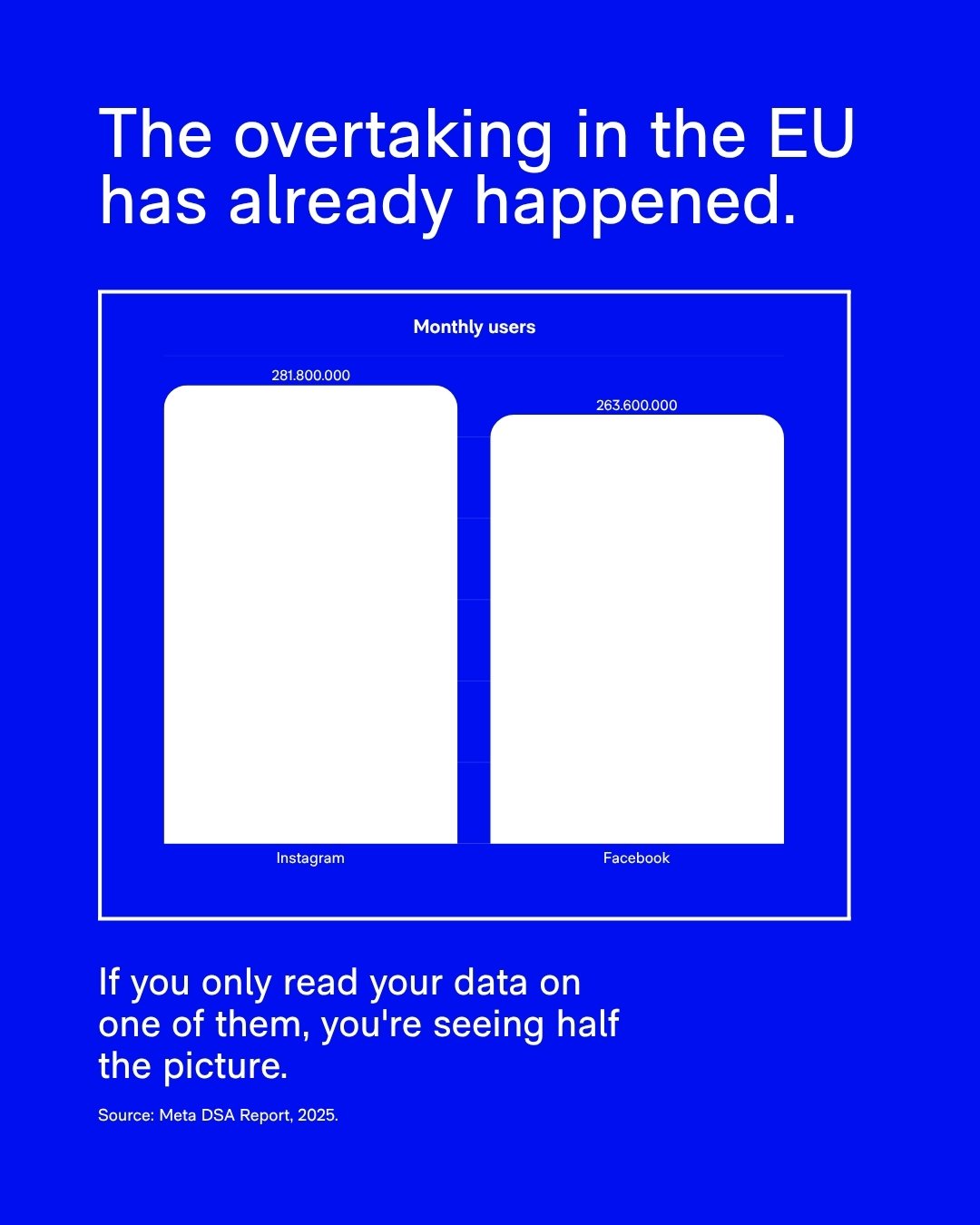
The first strategic shift to register is what has happened to the relative weight of the two platforms. According to Meta's own Digital Services Act disclosures, between January and June 2025 Instagram reached 281.8 million monthly active users in the European Union, against Facebook's 263.6 million. Instagram is now growing in the EO at roughly ten times the pace of Facebook. The implication is direct: Instagram is the primary European platform, not Facebook - and Reels, which account for half of the time spent on Instagram with 3.5 billion shared daily across both apps, should be read as a core format, not a complementary one.
The second shift is structural. Between 2018 and 2025, referrals from Facebook to external publisher sites dropped by more than 75%. Meta's algorithms increasingly favour content that keeps users on-platform, and link-heavy organic posting is no longer rewarded in the way it once was. At the same time, the paid side has consolidated around AI-driven automation: 82% of advertisers now use Advantage+ campaigns, which Meta reports deliver 27% higher ROAS than manual bidding. The European infrastructure for GDPR-compliant conversion tracking has matured in parallel, removing one of the last technical reasons to delay full paid integration.
The benefit for businesses
For European businesses entering 2026, the practical reading is this. Meta Business Suite is no longer a content publishing tool with ads attached. It has become a unified commercial environment where Instagram leads, Reels carry weight, paid spend is automated, and new fees are about to reshaped the cost base. The brands that adjust their planning to these four realities will move into the second half of the year with a clearer view of what their Meta presence is actually worth.